01The test itself
You've done the theory. That was the part where you had to know things. This is the part where you have to do things, and it is a different kind of nervous.
Here is exactly what happens, so that nothing on the day is a surprise. Everything in this chapter comes straight from DVSA, the people who run the test. Not from what someone's cousin said.
The shape of it
There are four parts:
- An eyesight check
- Two vehicle safety questions, called 'show me, tell me'
- Your general driving ability, which includes a stretch of independent driving
- Reversing your vehicle
You'll drive for around 35 minutes. That's it. Thirty-five minutes, and then you either have a licence or you have a date for another go. It is a much shorter thing than the weight it carries.
The test is identical whether the car is manual or automatic.
Part one: the eyesight check
Before you get in the car, the examiner will point at a parked car and ask you to read its number plate.
- 20 metres for a new-style plate (two letters, two numbers, then three letters, like Fifi's)
- 20.5 metres for an old-style plate
If you fail this, the test ends there. You do not get in the car. That is the whole reason it happens first.
If you wear glasses or lenses for driving, wear them. Put them on before you leave the house, not in the car park.
Part two: the 'tell me' question
Still standing at the car, the examiner asks you one question from a list of fourteen. You answer it out loud. You don't have to drive anywhere or fix anything, you just have to explain how you'd check something.
The full list is in the next chapter, along with what a good answer sounds like. There are only fourteen. You can learn all fourteen in an afternoon, and it is the single easiest mark on the whole test to bank in advance.
Part three: driving
Then you drive. Various roads, various traffic, no motorways.
Somewhere in this bit, the examiner asks the 'show me' question, and you do something while driving: put the rear demister on, wash the windscreen, that sort of thing. Seven possibilities, all in the next chapter.
You will also be asked to pull over and pull away several times, including:
- A normal stop at the side of the road
- Pulling out from behind a parked vehicle
- A hill start
And you might be asked to do an emergency stop. Not everyone gets one. Assume you will.
Independent driving
For 20 to 35 minutes of the drive, the examiner stops giving you turn-by-turn directions and you follow either:
- A sat nav, which they set up and provide, or
- Traffic signs, or
- A mix of the two
They'll tell you which. You cannot use your own sat nav. They bring theirs.
Two things worth knowing, because they take a surprising amount of pressure off:
Taking a wrong turning is not a fault. The examiner will not mark you down for it. They'll help you get back on route. Independent driving is testing whether you can drive safely without being told what to do next, not whether you can navigate. Go the wrong way calmly and safely and you have lost nothing.
If you can't see a sign, because a tree is in the way or a lorry is parked in front of it, the examiner will just give you directions until the next one. Say so if you can't see it.
Test routes are not published. Don't waste time hunting for them.
Part four: reversing
The examiner picks one of these three:
- Parallel park at the side of the road
- Park in a bay, either driving in and reversing out, or reversing in and driving out. They'll tell you which.
- Pull up on the right-hand side of the road, reverse for around two car lengths, then rejoin the traffic
One. Not all three. You still have to be able to do all three, because you won't know which until it happens, but on the day it is one exercise.
What counts as a mistake
Three kinds of fault:
| Fault | What it means |
|---|---|
| Driving fault (a 'minor') | Not potentially dangerous. But keep repeating the same one and it becomes a serious fault. |
| Serious fault (a 'major') | Something potentially dangerous. |
| Dangerous fault | Actual danger to you, the examiner, the public or property. |
You pass if you make no more than 15 driving faults, and no serious or dangerous faults.
Read that again, because it is the most misunderstood sentence in the whole business. Fifteen minors is a pass. You are allowed to be imperfect fifteen times. Most people who have just passed did not drive a flawless test, they drove a safe one.
You can carry on after a mistake. A mistake is not the end. The examiner will only stop the test if they think you are a danger to other people. If you clip a kerb on the parallel park, you have almost certainly not failed, and the very worst thing you can do next is spend the following ten minutes thinking about it instead of the road.
The one-mistake spiral fails more tests than the mistake ever does.
Afterwards
The examiner tells you what faults you made either way.
If you pass: you get a pass certificate, and they'll ask if you want your full licence posted out automatically. Hand them your provisional if so. You can drive on your own straight away. You do not wait for the licence to arrive.
If you don't: you book another test and pay again, and the earliest date you can choose is at least 10 working days away. That's about two weeks. Worth knowing in advance so it isn't a second piece of bad news on a bad afternoon.
Someone in the back
The examiner will ask whether you want someone to sit in the back during the test, and whether you want them there for the result. Usually the instructor. It can be a relative or a friend. They must be over 16 and they can't take any part in it.
Your call entirely. Some people are steadier with a familiar person there, some are much worse. You'll know which you are.
02The two questions you can prepare for
Everything else on the test depends on how you drive on the day. These twenty-one questions do not. They are published in advance, they never change, and you get asked exactly two of them.
Learn these and you have banked something before you turn the key.
The examiner asks the 'tell me' question standing at the car before you drive. You explain how you'd check something. You don't have to actually do it, except for the three that start "open the bonnet".
The 'show me' question comes while you're driving. You actually operate the control, when it's safe.
Where the answers come from
The wording of the questions below is DVSA's, word for word. The answers are mine, and they are the shape of a right answer for a normal car.
Sit in your instructor's car with the handbook and find the actual controls. Where the demister switch is, where the dipstick is, what the ABS light looks like on that dashboard. A generic answer delivered while hunting for the switch is worse than a plain one delivered while pointing straight at it.
You'll be in the instructor's car for the test, not Fifi. Learn that car's dashboard.
The fourteen 'tell me' questions
1. "Tell me how you'd check that the brakes are working before starting a journey."
They shouldn't feel spongy or slack. They should not pull to one side when you press them. Test them as you set off, at low speed, before you get anywhere near traffic.
2. "Tell me where you'd find the information for the recommended tyre pressures for this car and how tyre pressures should be checked."
The handbook, or the sticker inside the driver's door frame or the fuel filler flap. Check them with a pressure gauge when the tyres are cold. Don't forget the spare. Put the valve caps back on.
3. "Tell me how you make sure your head restraint is correctly adjusted so it provides the best protection in the event of a crash."
The rigid part should be at least as high as the top of your ears, ideally level with the top of your head, and as close to the back of your head as is comfortable.
4. "Tell me how you'd check the tyres to ensure that they have sufficient tread depth and that their general condition is safe to use on the road."
No cuts or bulges in the sidewall. The legal minimum tread depth for a car is 1.6 mm across the central three-quarters of the tread, all the way round. Check it with a gauge, or use the tread wear indicator bars moulded into the grooves.
5. "Tell me how you'd check that the headlights and tail lights are working. You don't need to exit the vehicle."
Switch them on and walk round. Or if you can't get out: use a reflection in a window or a wall, or ask someone to check.
6. "Tell me how you'd know if there was a problem with your anti-lock braking system."
A warning light on the dashboard, which comes on when you switch on the ignition and should go out shortly after. If it stays on, or comes on while driving, there's a fault.
7. "Tell me how you'd check the direction indicators are working. You don't need to exit the vehicle."
Put the hazard warning lights on, which flashes all four, and walk round. Or watch and listen to the tell-tale on the dashboard.
8. "Tell me how you'd check the brake lights are working on this car."
Press the brake pedal and get someone to look. Or reverse up to a reflective surface, a window or a garage door, and watch the reflection.
9. "Tell me how you'd check the power-assisted steering is working before starting a journey."
If the steering feels heavy, the system isn't working. Two ways to check: gentle pressure on the wheel while you start the engine should produce a slight movement as the system kicks in. Or turn the wheel just after moving off, and it should feel light.
10. "Tell me how you'd switch on the rear fog light(s) and explain when you'd use it/them. You don't need to exit the vehicle."
Point at the switch, and say you'd know it was on by the warning light on the dashboard. You use them only when visibility is seriously reduced, generally less than 100 metres. And you must switch them off when visibility improves, because they dazzle the driver behind and mask your brake lights.
11. "Tell me how you switch your headlight from dipped to main beam and explain how you'd know the main beam is on."
Point at the stalk. The blue warning light on the dashboard tells you main beam is on.
12. "Open the bonnet and tell me how you'd check that the engine has sufficient oil."
Find the dipstick, pull it out, wipe it clean, put it fully back in, pull it out again and read it. The level should sit between the minimum and maximum marks.
13. "Open the bonnet and tell me how you'd check that the engine has sufficient engine coolant."
Find the coolant header tank and check the level is between the minimum and maximum marks. Top up with the right coolant mix when the engine is cold. Never open the cap on a hot engine.
14. "Open the bonnet and tell me how you'd check that you have a safe level of hydraulic brake fluid."
Find the brake fluid reservoir and check the level is between the minimum and maximum marks.
For those last three, you need to be able to open that particular bonnet, which means knowing where the release catch inside the car is and where the safety catch under the bonnet lip is. Practise it once and it's yours forever.
The seven 'show me' questions
Asked while you're driving. The examiner will not ask you to do something dangerous, and the phrase "when it's safe to do so" is in every one of them for a reason. If you're mid-roundabout, wait.
1. "When it's safe to do so, can you show me how you wash and clean the rear windscreen?"
2. "When it's safe to do so, can you show me how you wash and clean the front windscreen?"
3. "When it's safe to do so, can you show me how you'd switch on your dipped headlights?"
4. "When it's safe to do so, can you show me how you'd set the rear demister?"
5. "When it's safe to do so, can you show me how you'd operate the horn?"
6. "When it's safe to do so, can you show me how you'd demist the front windscreen?"
7. "When it's safe to do so, can you show me how you'd open and close the side window?"
Every one of these is a control you can find without looking. That is the actual test here: can you operate the car without taking your eyes off the road? Practise finding all seven by feel, and if you genuinely must glance down, glance, don't stare.
The horn one catches people out. It feels rude to sound the horn for no reason, so people hesitate. Just do it, one short press.
The one that goes wrong
The commonest mistake on the 'show me' question is stopping driving properly while you do it. Someone gets asked for the rear demister, finds it, sets it, and in those three seconds drifts towards the kerb or misses a mirror check.
You are still being marked on your driving the whole time. The question is an extra thing you do while driving well, not an interruption to it.
03The reversing exercise
One of three. You won't know which until the examiner tells you, so all three have to be there.
The thing nobody tells you about reversing exercises: the examiner is not measuring your parking. They are watching whether you keep looking around while the car is moving backwards. You can take three goes at getting into a bay and still pass, as long as you looked properly every time and didn't put anyone in danger. You can slot in perfectly first time and fail, if you did it staring at the mirror with a pedestrian walking behind you.
Accuracy is a bonus. Observation is the test.
The three
1. Parallel park at the side of the road
Pull up alongside a parked car, then reverse into the space behind it.
The bit that goes wrong is the first half-second. People are so focused on the gap that they move off backwards without checking whether anything is coming. Before the car moves at all: all mirrors, over your left shoulder, over your right shoulder, and out of the back window. Then move.
Then keep looking while you go. Not one big check and then a blind reverse. Look, move a little, look again. If a car appears at the end of the road, stop and let them past. Stopping to let someone through is not a fault, it is the right answer.
You're aiming to finish reasonably close and reasonably parallel to the kerb. Reasonably. Not perfectly.
2. Park in a bay
Either you drive into the bay and reverse out, or you reverse into the bay and drive out. The examiner tells you which. Listen to which one, because doing the other is an unforced error.
This one is usually at the test centre car park, sometimes at the start and sometimes at the end.
Same rule: watch what's around the car, not just the white lines. Car parks have people walking through them, and a pedestrian appearing behind you while you reverse is the whole point of the exercise.
If you end up badly placed, you're allowed to pull forward and adjust. Do it. A tidy correction is much better than a bad park you've settled for.
3. Pull up on the right, reverse two car lengths, rejoin
You pull over onto the right-hand side of the road, facing oncoming traffic, reverse about two car lengths back, then pull out and rejoin the traffic on the correct side.
This is the one that feels most wrong, because everything about being on the wrong side of the road feels wrong. That is deliberate. It's testing whether you can handle being somewhere unusual without losing your judgement.
Three things:
- Getting there. You are crossing a lane of oncoming traffic. Mirrors, signal, and be certain. Don't cross on a hope.
- Reversing. Look round properly. You are on the wrong side, so the traffic coming towards you is on your right and behind you at the same time.
- Rejoining. This is the hardest part and where the faults come. You are pulling out from the right-hand kerb into traffic coming from behind you on your left. Blind spot check matters more here than almost anywhere else on the test.
The emergency stop
Not part of the reversing exercise, but this is the right chapter for it. You might get asked, and you might not.
The examiner will warn you first. They'll explain it before you set off, and then at some point they'll say something like "when I say stop, stop as quickly and as safely as you can", and give you a clear signal.
Stop as fast as you safely can, both hands on the wheel, straight ahead. Don't check the mirror first. In a real emergency, the time it takes to look in the mirror is the time you needed. Brake first. The examiner has already checked behind you, which is why they picked that moment.
Modern cars have ABS. If the car has it, the pedal will judder and make a noise under your foot. That is the system working, not something breaking. Keep your foot down.
Once stopped: handbrake, neutral, then look all round properly before moving off again.
What to actually practise
If you've only got so many lessons left before November, spend them on:
- Observation while moving backwards. Every exercise, every time. This is the marked thing.
- The pull-up-on-the-right rejoin. It's the least natural of the three.
- Recovering from a bad start. Get your instructor to deliberately set you up badly, so that correcting a manoeuvre becomes something you've done before rather than something that panics you on the day.
Nobody fails for a wonky park. People fail for reversing without looking.
04Why people actually fail
DVSA publishes the top ten reasons every year. This is the list for April 2024 to March 2025, in order.
It is a genuinely useful document, because the list barely changes and it is much shorter and much duller than people expect. Nobody fails for the exotic thing they're lying awake worrying about.
- Not making effective observations at junctions
- Not using mirrors correctly when changing direction
- Not moving off safely
- Incorrect positioning when turning right at junctions
- Not responding appropriately to traffic lights
- Not having proper control of the steering
- Not responding correctly to road markings
- Not responding correctly to traffic signs
- Poor positioning on the road during normal driving
- Not driving at a safe and reasonable speed
Look at what's on that list and what isn't.
Not on it: parallel parking. Roundabouts. Hill starts. Stalling. The emergency stop. Reversing into a bay. Every single manoeuvre that people spend their last three lessons obsessing over.
On it, in the top three: looking. Looking. And looking before moving.
Seven of the ten are about knowing what is around you and reacting to what the road is telling you. The test is an observation test with some driving attached.
DVSA's own note on why the first one matters: ineffective observation by a driver, rider or pedestrian was a factor in 47% of all collisions in 2023. It's the top fail reason because it is the top killer, not because examiners are fussy.
The top three, and what they actually look like
1. Observation at junctions
DVSA gives these as the specific things that go wrong:
- Approaching a crossroads without registering that it is a junction at all, and crossing without looking either way
- Looking too late as you emerge, so you're already partly into the new road by the time you actually look
- Turning left out of a minor road onto a busier one and not looking left, so you don't see the parked car, the skip or the cyclist you're about to turn into
That second one is the killer, and it's subtle. You did look. You looked at the wrong moment. Looking as you arrive at the give-way line, when you can still stop, is an observation. Looking once the bonnet is already out is a formality.
Look early enough that the answer can still change what you do.
2. Mirrors when changing direction
Mirror before signal, signal before manoeuvre. Every time you change direction or speed.
The failure isn't usually forgetting entirely. It's checking the mirror as a ritual, at the wrong moment, without taking in what's in it. An examiner sitting beside you can tell the difference between a look and a glance, and they will mark the difference.
Check early enough that what you see can change your mind.
3. Moving off safely
Every single time you pull away, from anywhere: mirrors, blind spot, signal if it would help anyone, final look, go.
The Highway Code is explicit about this (rule 159): use all mirrors, look round to check the blind spots, signal if necessary, look round for a final check, and move off only when it is safe.
You'll do this perhaps fifteen times during the test. It's the most repeated single action of the whole thirty-five minutes, which makes it the biggest single source of a repeated driving fault, and repeated driving faults are what turn into a serious one.
The thing that matters more than any of this
Remember the pass mark: no more than 15 driving faults, no serious or dangerous faults.
Fifteen. You have a fair amount of room to be human.
What you have no room for is a pattern. One badly-judged mirror check is a minor. The same badly-judged mirror check eight times is a serious fault, because it stops being a slip and starts being how you drive.
So if you catch yourself making a mistake, the useful response is not to be annoyed about that one. It's to make sure the next one is different.
Speed
Number ten on the list, and worth its own note because it goes both ways.
Driving too fast is obvious. Driving too slowly is also a fault, and it's the one nervous candidates fall into. Doing 22 in a 30 because you're anxious is not cautious driving, it's holding up traffic and failing to make normal progress, and it gets marked.
The Highway Code framing is the one to hold: drive at a speed that lets you stop well within the distance you can see to be clear. Sometimes that's the limit. Sometimes it's less. It is never more.
Stopping distances, since you'll want them
Straight from the Highway Code's official diagram. Thinking distance plus braking distance, on a dry road, in a car in good condition. A car length is taken as 4 metres.
| Speed | Thinking | Braking | Total |
|---|---|---|---|
| 20 mph | 6 m | 6 m | 12 m, 3 car lengths |
| 30 mph | 9 m | 14 m | 23 m, 6 car lengths |
| 40 mph | 12 m | 24 m | 36 m, 9 car lengths |
| 50 mph | 15 m | 38 m | 53 m, 13 car lengths |
| 60 mph | 18 m | 55 m | 73 m, 18 car lengths |
| 70 mph | 21 m | 75 m | 96 m, 24 car lengths |
Notice that from 20 to 40 you double the speed and triple the distance. That relationship is the whole argument about speed limits in one line.
On the road, the practical version is the two-second gap: pick a fixed point, and if you reach it less than two seconds after the car in front, you're too close. Double it in the wet. Up to ten times in ice.
05Test day
What you must take
- Your UK provisional driving licence. No licence, no test, no refund.
- Your theory test certificate, if you have it. If you've lost it, don't panic and don't order a replacement. The examiner checks your theory pass on their system before the test starts.
- A car. Almost certainly your instructor's.
If you lose your licence before the test, a replacement can take up to 15 days to arrive. Rearrange the test rather than turn up hoping.
You need to be recognisable from the licence photo. Dyed hair or a different fringe is fine. You don't need to do anything about that.
Glasses
If you need them to read a number plate at 20 metres, wear them from the moment you leave the house. This is the one part of the test that can be over before it starts.
The morning
You have a November test, so a few things are true that wouldn't be in June.
It will probably be dark, or nearly. Scottish November afternoons go early. Make sure you've had lessons in the dark, and that you know that car's light switches by feel, because a 'show me' question about dipped headlights lands differently at four in the afternoon.
It may well be wet, and it might be icy. Wet roads double the gap you need. Ice can multiply it by ten. If it's freezing, the examiner may cancel, and if they do you get another date without paying again.
Clear the car properly. All the glass, all the lights, the roof. Not a letterbox scraped in the windscreen.
Nerves
You will be nervous. Everybody is nervous. The examiner has watched thousands of nervous people and expects it. Being visibly nervous is not a fault, and it is not something they mark.
Three things that genuinely help:
Treat it as a drive, not an exam. The examiner is not trying to catch you out. They're sitting there noting whether the driving is safe. There's no trick, no trap, and no quota of people they have to fail.
Talk if it helps you. You're allowed to speak. If you're not sure what they meant, ask them to repeat it. Asking is not a fault. Guessing and getting it wrong is.
Have a plan for the mistake. Not if, when. Decide now what you'll do: notice it, let it go, drive the next thirty seconds well. The mistake is almost never what fails people. The ten minutes of rumination afterwards is.
The bit to actually rehearse
Ask your instructor for a full mock test, start to finish, with them silent and playing the examiner. Not a lesson with a mock bit in it. The whole thing, including the walk to the car, the plate reading and the 'tell me' question.
Do it more than once if there's time. The first time you experience thirty-five minutes of nobody helping you should not be the real one.
When it's over
The examiner tells you your faults either way, and offers to go through it with you. Take that. It's a free, detailed critique of your driving from someone who does this for a living, and it's worth having whichever way it went.
If you pass: they'll give you a pass certificate and ask if you want the full licence sent automatically. Hand over the provisional if so. You can drive on your own immediately. You don't wait for anything to arrive in the post.
If you don't: you rebook and pay again, and the earliest available date is at least 10 working days away. Roughly two weeks.
And that is genuinely all it is. Plenty of extremely good drivers failed their first one. It's a bad afternoon, not a verdict. The people who end up driving well are the ones who kept going, not the ones who passed first time.
Either way, ring me.
06Fifi
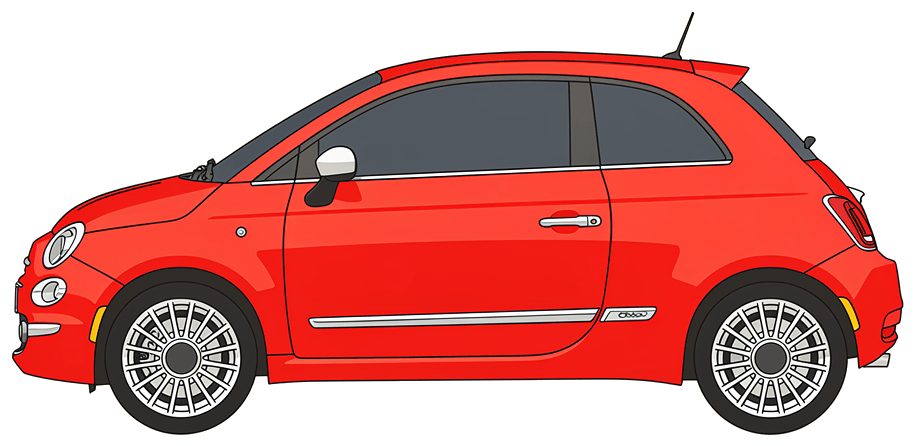
She's not part of the test. You'll be sitting in your instructor's car with L-plates on it, and the examiner will never meet her.
She becomes relevant about ten minutes afterwards, which is the part nobody prepares you for. One moment there is a qualified adult in the passenger seat with a spare set of pedals. The next there is nobody, and the car is yours, and it is entirely up to you.
So this chapter is about that.
The first year
The Highway Code has a section called the Safety Code for New Drivers, and it opens with a number worth sitting with:
As many as one new driver in five has some kind of collision in their first year of driving.
Not because new drivers are bad. Because they have the skills and not yet the experience, and the gap between those two things is exactly where trouble lives. You have proved you can drive. You have not yet built the thing that lets you read a road before it does anything.
That takes months, and there's no shortcut. What there is, is a list of the situations where the gap costs most.
Late nights. Between midnight and 6am is the high-risk window for new drivers, and many of the worst collisions happen at night. Avoid it in the first months unless you really need to.
Passengers. This is the big one, and it's the one that sounds least like a safety issue. A car full of your friends is a car full of noise, and you're responsible for all of them. The Highway Code puts it plainly: don't let them distract you or encourage you to take risks, and tell them you need to concentrate. Saying that out loud to your mates is a slightly awkward thirty seconds. Do it anyway.
Showing off. Never compete with another driver, especially one driving badly. There is no version of that where you win.
Speed on bends. Many serious collisions happen because the driver lost control, particularly on a bend. A bend punishes being slightly too fast far more harshly than a straight does.
Anything you've drunk or taken. Including things from a chemist. Read the label.
Seat belts. Everyone, the whole journey. Your car, your responsibility.
The two-year rule, which is stricter than you think
Under the New Drivers Act:
If you get six penalty points within two years of passing your first test, your licence is revoked.
Not suspended. Revoked. You go back to a provisional licence, and you have to pass both the theory and the practical again to get your full licence back.
Six points is not very many. A single speeding offence is normally three. Using a phone at the wheel is six on its own, which means it is a one-strike offence for you until November 2028.
Any points you picked up on your provisional licence carry over too.
That's the harsh version. The useful version is that it exists because the first two years are statistically the dangerous ones, and the law is essentially betting that a hard consequence changes behaviour in the window where behaviour matters most.
Pass Plus
Extra training after you pass, run through DVSA. It covers the things the test can't: motorways, dual carriageways, night driving, all weathers, rural roads.
Two reasons to think about it. It reduces your risk in the year where your risk is highest. And some insurers discount for it, which at your age is not nothing.
Ask your instructor. They may well offer it.
Motorways
You can drive on a motorway on your own the day you pass. Nothing stops you.
That doesn't mean you should do it on day one. Motorways are not on the test, so unless you've had specific motorway lessons, the first time you join one at 70 with a lorry alongside will be genuinely new. Learners are allowed motorway lessons with an approved instructor in a dual-control car, and if there's any chance of it before November, it's worth more than another hour of bay parking.
If not, get someone experienced to sit with you the first couple of times. Not as a supervisor, you don't need one. As company.
Looking after her
Fifi is a 2017 Fiat 500. She has done a few years already, which means the checks matter more than they would on a new car.
Every couple of weeks, before a long run, and any time something feels different:
- Tyres. Pressure when cold, from the handbook or the sticker in the door frame. Tread depth at least 1.6 mm across the central three-quarters, all the way round. Look at the sidewalls for cuts and bulges.
- Oil. Dipstick, wipe, back in, out, read. Between min and max.
- Coolant. Between min and max, in the header tank, engine cold. Never open a hot one.
- Screen wash. Fill it. In November you'll get through it fast, and a salted screen you can't clear is a genuine hazard.
- Lights. Walk round with them on. Hazards for the indicators.
Anything you're not sure of, look it up in her handbook, not in your head. And if a warning light comes on that you don't recognise, look it up before you drive rather than after.
Tax, MOT and insurance all need to be current. The MOT is annual once a car is over three years old, so hers is due every year. Driving uninsured is an offence in its own right.
The first drive on your own
Make it a boring one.
Somewhere you know, in daylight, no passengers, no time pressure, nowhere you have to be. Let the strangeness of the empty passenger seat be the only new thing about it.
The second one can be more interesting.
Then what
The reason this chapter exists is that passing your test is not the finish line. It is the point where you start actually learning to drive, and you do that in a car with nobody watching, which is a much better teacher and a much less forgiving one.
Take it seriously for a year. After that it becomes the thing it should be, which is freedom.
Text me when you pass.